-
2025-10-25
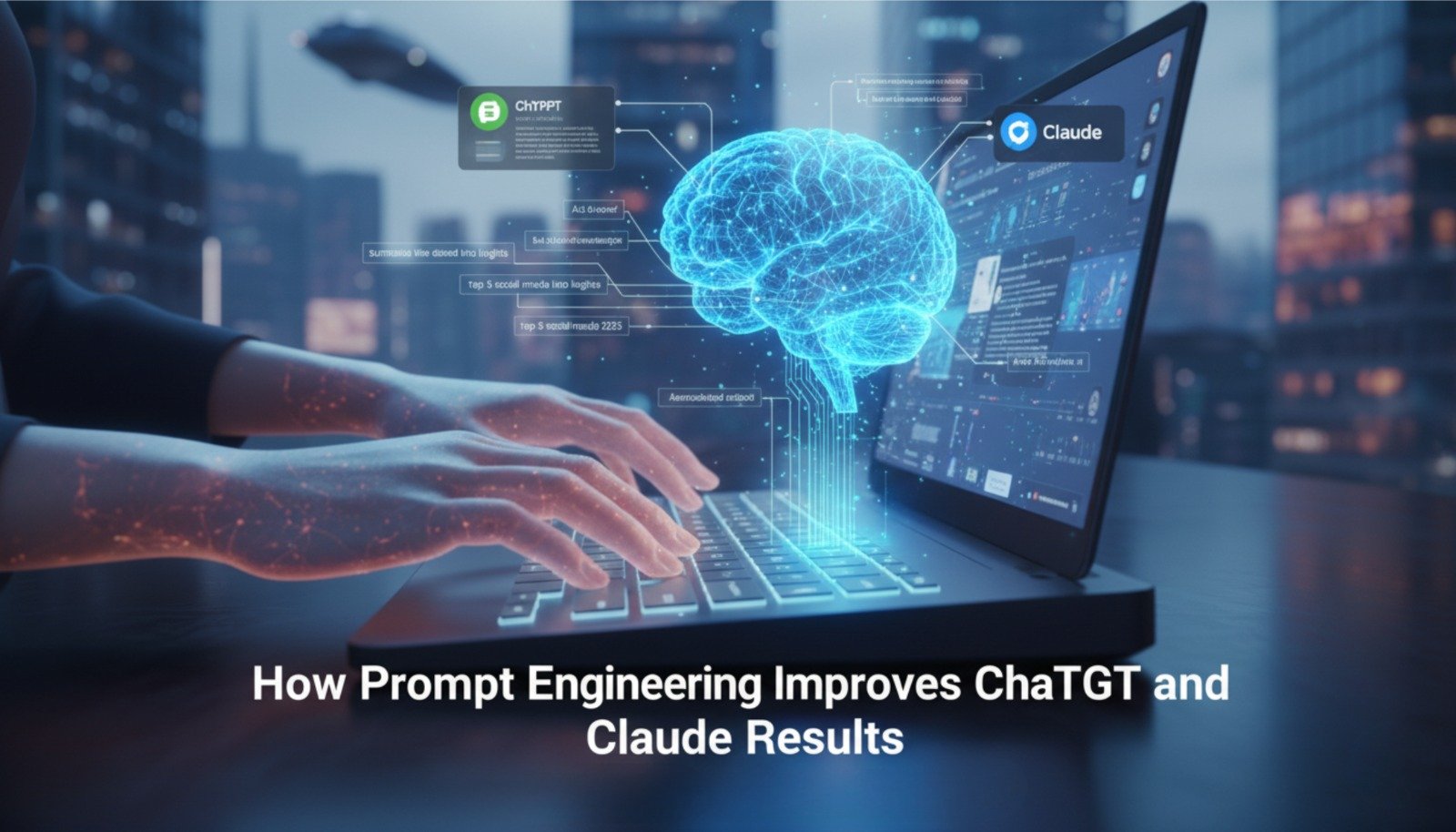
Introduction: Why AI Results Vary So Much
You know this - two individuals can pose the same AI query, but receive entirely disparate outputs.
The variation isn't the AI model - it's the prompt.
AI systems such as ChatGPT (from OpenAI) and Claude (from Anthropic) are powerful but only as good as the instructions they are given. That is where Prompt Engineering fits in - the essential skill that makes AI more than just a blind idea machine.
In this article, we'll discuss how prompt engineering enhances ChatGPT and Claude's performance, and how you can use it in your own AI workflows.
What Makes ChatGPT and Claude Powerful - Yet Limited
Both ChatGPT and Claude are Trillion-Word Large Language Models (LLMs).
They can reason, summarize, code, and even create - but they don't "understand" in the way humans do.
Rather, they generate the next most appropriate word based on what you've entered as the input prompt.
That is why ambiguous or ill-defined prompts give rise to incoherent, concise, or redundant responses.
Prompt Engineering fills this gap - assisting you in expressing human intention in a machine-friendly way that results in high-quality, context-sensitive responses.
How Prompt Engineering Enhances AI Output
a. Clarity and Context
A general prompt gives the model too much latitude, whereas a well-designed prompt provides structure and limits.
Example:
"Write about digital marketing."
"Write as a veteran digital marketing expert. Write a 500-word blog on 2025 social media trends with examples and data points."
The second prompt introduces specificity, tone, audience, and purpose - leading to a professional, publishable response.
b. Controlled Creativity
Prompt engineering balances creativity and accuracy.
You can put limitations or request several creative alternatives:
"Create 3 different taglines for a fitness app - a professional, a humorous, an emotional one."
AI adheres to the format, producing marketable concepts you can use right away.
c. Role Assignment
Both ChatGPT and Claude perform better when assigned a role or persona.
"You are a seasoned HR manager."
"You are a seasoned 10-year Python developer."
Assigning a role makes models pick up on domain-specific language and voice - delivering more contextually correct results.
d. Format & Output Control
You can specify exactly how you want the response to look:
"Summarize this article in a 5-bullet list with a one-line conclusion."
This is useful when creating automation workflows or integrating AI in business tools such as Notion, Zapier, or CRMs.
Prompt Engineering Techniques for Better ChatGPT and Claude Results
Let’s look at some practical prompt patterns you can start using today:
Each of these keeps ChatGPT and Claude in line with your intentions and background.
Comparing ChatGPT vs Claude: How Prompt Engineering Affects Each
Both models are excellent at different things - but prompt engineering means you have reliable, customized, and high-quality output from either.
Business Applications of Prompt Optimization
For Marketers:
Create campaign ideas, ad copy, and SEO blogs customized for particular audiences.
"Perform as a content strategist. Design a 30-day blog calendar for an AI automation startup."
For Developers:
Receive exact code snippets or bug descriptions.
"You are a Python developer. Fix this code and describe what went wrong."
For Analysts:
Convert data into summaries and visualizations.
"Summarize this CSV dataset and identify top three insights."
For Educators:
Customize study materials or quizzes.
"Perform as a teacher. Design a 10-question quiz on the subject of AI ethics."
All of these use cases demonstrate that prompt design = productivity.
Real-World Impact: Measurable Improvements
Teams that optimize with prompt engineering report:
40–60% reduced content creation time
30% more accurate AI output
25% less post-edit time
Increased user satisfaction with AI processes
These gains immediately map to business efficiency and cost reduction.
The Role of Continuous Refinement
Even experienced prompt engineers hardly ever get it right on the first attempt.
True skill is in iterating - tuning the language, tone, and structure until the model is delivering reliably what you require.
Tip: Build a prompt library for your company. Save top-performing prompts by use case (content, marketing, coding, etc.) and continually fine-tune them over time.
Conclusion: Turning AI into a Strategic Partner
Prompt Engineering brings ChatGPT and Claude from "smart tools" to strategic partners.
Rather than random output, you have valuable, actionable results that benefit business.
In short:
Good AI performance is not in the model - it's in the prompt.
Whether you're crafting blog posts, automating reports, or teaching chatbots - gaining control over prompt engineering is your quickest path to mastering AI in 2025.
Weekly trending

The Best AI Tools for Prompt Engineers (Free & Paid)
29-Oct, 2025